Down 30 lbs. Up 4,000 Miles.
Gary Welk was in his fifties. Out of shape in the way midlife sneaks up on you — not all at once, just year after year of life taking priority over everything else. And he was living with atrial fibrillation, a heart condition he managed but never beat. It sat in the background of everything: his health, his energy, his sense of what his body could still do.
He wasn't new to bikes — some mountain biking, some bike-packing over the years. But real training? Structured miles, road cycling as a discipline instead of an occasional hobby? That was new. So was the framework he'd use to get there: G4L, built on the lived experience of co-founder Jay Crain, who coached Gary through it directly. Gary didn't just borrow the program. He lived it — the consistency, the fundamentals, the refusal to treat midlife as a finish line.
He needed a target. He found one: Skinny Tire, a multi-day cycling event through Moab, Utah, climbing from 4,000 feet to over 6,000. A date on the calendar and a mountain to prove it against — the kind of goal that turns training from an idea into a habit.
April 2021. Year one: 1,052 miles. Mostly flat roads and a trainer in Chicago. Not glamorous. Just work.
Winter hit and he didn't stop. Built a base through the cold months because that's what the work actually looks like — the part nobody posts about. By 2022 he'd tripled his output: 3,239 miles, 24,500 feet of climbing. Down to 220 pounds.
The numbers were real. The doubt wasn't gone.
In March 2023, Skinny Tire arrived. He'd built his fitness near sea level. This was the test.
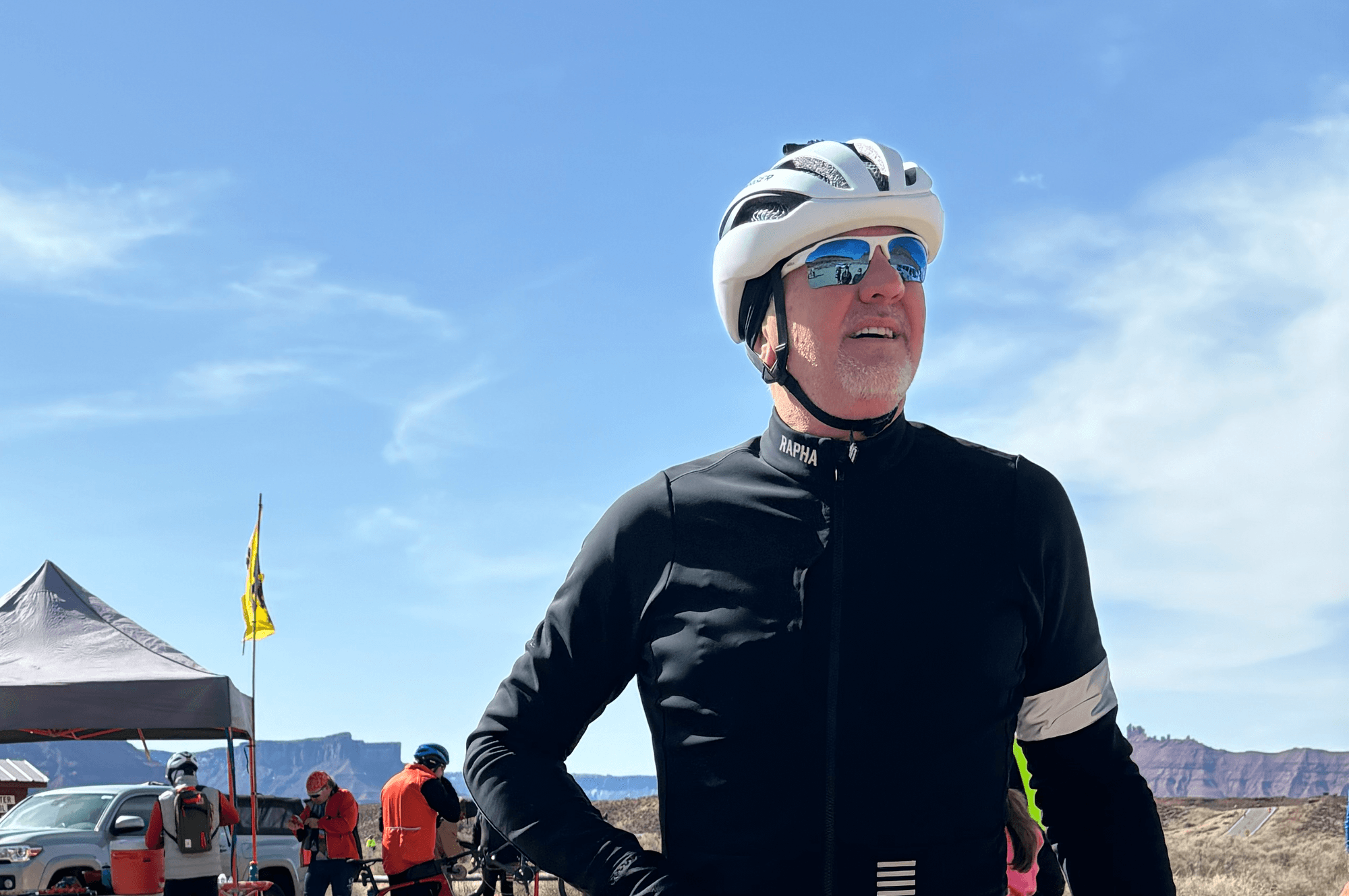
Day one, the altitude hit hard. He pulled over more than once to catch his breath on the climb to Dead Horse Point. He kept going anyway. Made the summit. Three more days followed — Colorado River, Arches, a closing 35-mile push — stacking miles on legs that had already given plenty.
He finished all of it.
By year's end: 4,178 miles. Gary Welk, accomplished cyclist. Full stop.
Here's the part that matters more than the mileage. The discipline he built on the bike — the consistency, the cardiovascular strength, the refusal to stay where he was — put him in a position to undergo a procedure that managed his AFib permanently
The riding didn't cure it. But it built the body that could handle the fix, and the identity that wouldn't settle for less.
That's the G4L and 4R framework. No hacks or quick wins. A foundation strong enough to carry you through whatever's next.